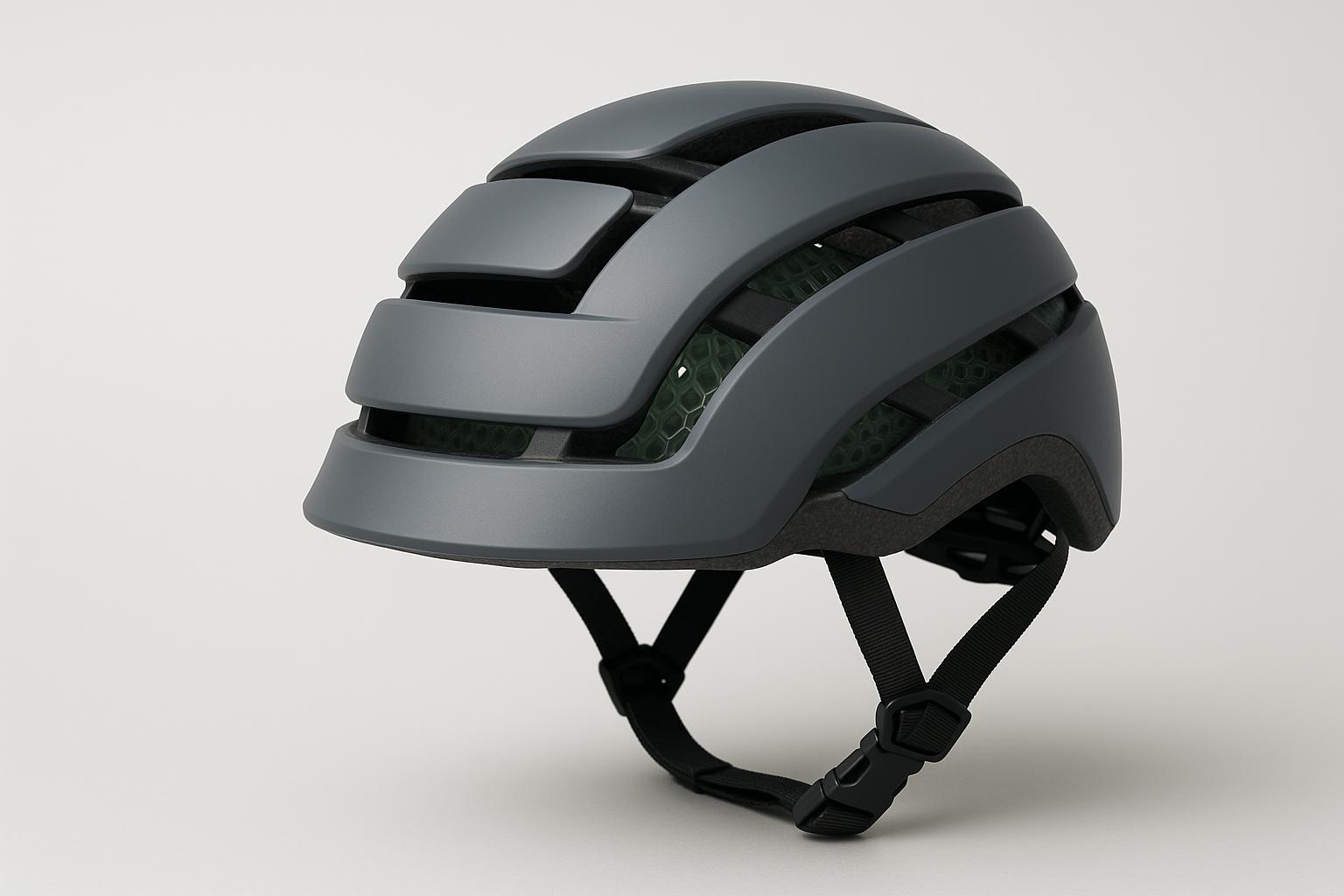
This review evaluates foldable helmets that use rotational-impact systems other than MIPS. It focuses on design, lab performance, user comfort, and real-world trade-offs for urban riders in 2024 and 2025. I compare technologies such as WaveCel, SPIN, Koroyd, and viscoelastic liners, and explain how each manages rotational energy. Readers will get clear buying guidance, helmet examples, and maintenance tips. The goal is practical, evidence-aware analysis for people who want a compact helmet without relying on MIPS.
I evaluate foldable helmet with MIPS alternative offerings released or updated in 2024 and 2025, describing the engineering choices behind each model and how they perform in urban crash scenarios. The review separates lab findings from rider experience and clear recommendations, inspect service, fit, and storage concerns unique to helmets that fold without MIPS. This analysis is meant for commuters, folding-bike travelers, and urban tourers.
Overview of alternative rotational systems
They reduce rotational forces by allowing controlled relative motion or by absorbing shear energy. Manufacturers implement this using low-friction liners, cellular structures, or viscoelastic materials that deform differently under rotational load.
Key categories
In foldable helmet designs the choice matters more than in fixed shells because compression and hinge systems change how liners sit. Understanding whether a foldable helmet with MIPS alternative uses shear layers, crushable cells, or smart foam helps predict durability and protective behavior.
Design trade offs
Trade offs include weight, folding mechanism complexity, and how the rotational system integrates with vents. Some systems add bulk or require thicker shell sections, which can reduce the compactness riders expect from a foldable helmet with MIPS alternative. Fit and storage matter for safety and longevity.
How WaveCel and similar systems work
They absorb rotational energy by deforming or allowing controlled sliding inside the shell. WaveCel uses a collapsible cellular structure while other systems use low-friction liners or engineered foam layers to dissipate shear.
Performance notes
In lab tests in 2024 and 2025 some WaveCel-equipped helmets showed strong rotational reduction compared with basic EPS shells. However performance varies by model, shell fit, and how hinge joints or folding elements alter liner geometry.
Implications for foldable helmets
These systems can work in foldable helmets but require careful hinge design so liners remain aligned during a crash. Manufacturers in 2024 and 2025 used different approaches such as removable liner modules or reinforced hinge zones to protect the rotational system. Expect small trade-offs in pack size and ventilation too.
SPIN, Koroyd, and other liner systems
These systems use different mechanical principles to manage rotation. SPIN and similar shear pads reduce friction while Koroyd and cellular cores absorb energy through controlled crushing.
Shear pads and pads in shell
Shear pad systems add a thin low-friction layer between head and foam to allow small sliding motions during angled impacts. They are easy to adapt in folding shells because they occupy little volume and can be integrated around a hinge.
Cellular cores and smart foams
Koroyd and similar honeycomb tubes absorb energy with progressive deformation, offering consistent rotational performance. Smart foams and viscoelastic inserts used in 2024 and 2025 offer high energy dissipation but can add cost and require replacement after significant impacts. Check manufacturer guidance on service life and repair for liners regularly.
Foldable helmet design compromises
Compromises center on hinges, liner stability, and ventilation. Designers must balance the needs of a compact folded profile with consistent impact geometry when deployed.
Hinge engineering
Hinge areas require reinforcement to prevent liner movement that would compromise rotational protection. In 2024 and 2025 some makers used removable liner cassettes or bolstered mounts to keep shear layers aligned across the hinge.
Ventilation and packability
Ventilation typically suffers if too much material is added to support rotational systems. Good foldable helmet designs seen in 2024 and 2025 route air channels carefully and use thinner liners to retain breathability while keeping rotational features.
Maintenance concerns
Hinges require periodic inspection and occasional lubrication to ensure safe folding. Always follow manufacturer maintenance guidance and replace liners promptly after significant impacts without delay.
Lab testing and real world performance
Lab tests measure linear and rotational acceleration, but real world results depend on many variables. Test protocols in 2024 and 2025 improved rotational metrics, but no single number captures rider risk across scenarios.
Interpreting lab ratings
Ratings help compare models but must be read alongside fit and helmet condition. A foldable helmet with MIPS alternative can score well in labs if liners and hinges are engineered to perform under test rigs.
Real world variables
Road conditions, rider behavior, and crash mechanics matter more than small differences in ratings. User reviews from 2024 and 2025 show some foldable helmets perform reliably for commuting, while others require careful handling to avoid hinge fatigue.
Inspect before each ride and replace any helmet after suspected structural impact immediately.
Buying guide and top considerations
Prioritize fit, hinge durability, and transparency about rotational technology. Look for documented test data from 2024 or 2025, clear maintenance instructions, and replaceable liner options.
Checklist for shoppers
Check these items before buying a compact helmet.
- Fit and retention system
- Hinge reinforcement and warranty
- Rotational system: SPIN WaveCel Koroyd viscoelastic
- Test data and lab ratings
- Replaceable liners and service policy
- Ventilation and pack size when folded
Top recommendations
If you need a foldable helmet with MIPS alternative prefer models with removable liner cassettes and documented hinge testing. For commuters, prioritize ventilation and replaceable liners; for short-trip pack-and-go use, prioritize minimum folded size and easy cleaning.
Try before you buy and test folding action several times for fit changes. Buy from vendors with generous return policies.
Frequently Asked Questions
Are foldable helmets safe?
Yes when designed and tested they can reduce rotational and linear forces. Prefer models with independent data from 2024 and 2025 and peer reviews online.
Fit and intact hinges are essential for protection. Replace after significant impacts and follow service guidance. Check warranties and return policies regularly.
Do alternatives outperform MIPS?
Not universally; performance depends on impact angle, helmet fit, and integration with the shell. Independent testing in 2024 and 2025 shows some alternatives equal or exceed MIPS on rotational metrics in specific models.
Choose systems with published lab comparisons. Fit and serviceability matter more than brand claims.
How to maintain a foldable helmet?
Inspect hinges and liner seating before each ride and after folding frequently. Clean liners according to manufacturer instructions and avoid solvents that degrade smart foams.
Replace liners after a significant impact or when they compress or tear. Use warranty services if hinges loosen or crack.
Conclusion
Alternatives to MIPS can be effective in foldable helmets when liners remain aligned and hinges are robust. Check independent 2024 and 2025 test data, confirm replaceable liners, inspect folding mechanisms before buying. Fit, ventilation, and maintenance matter more than marginal differences in lab numbers. Prioritize models with clear service guidance and removable liner modules. Replace after any substantial impact.
Buying a foldable helmet with MIPS alternative requires skepticism and verification of claims. When designs report real-world durability and provide user-serviceable liners they become a reliable option for commuters. Use the checklist in this review to compare models and make a confident choice. Inspect folding action repeatedly, follow maintenance schedules, and replace any part showing wear to keep protection high.
Frequently Asked Questions
What are the main alternatives to MIPS used in foldable helmets?
Common MIPS alternatives in foldable helmets include WaveCel (cellular crush layers), SPIN (low‑friction pads), Koroyd (energy‑absorbing tubular cores), and viscoelastic or shear‑absorbing liners. Manufacturers implement these as shear layers, crushable cell structures, or smart foams that either allow controlled relative motion or absorb shear energy to reduce rotational forces.
How do MIPS alternatives perform compared to MIPS in lab tests and real‑world urban riding?
Performance varies by technology and model: some WaveCel and SPIN implementations perform comparably to MIPS in independent lab rotational tests, while Koroyd and viscoelastic liners often excel at linear energy absorption and have different rotational behavior. Real‑world effectiveness also depends on helmet fit, hinge and compression design in foldable helmets, and how the liner sits after folding — so check independent lab results and rider reviews for the specific 2024/2025 models you’re considering.
What should urban commuters look for when choosing a foldable helmet that uses a MIPS alternative?
Prioritize correct fit, relevant safety certifications (e.g., CPSC, EN 1078), and independent test data for the specific model and year (2024/2025). Inspect how the rotational system integrates with the hinge and liner seating, check for replaceable or washable liners, ventilation, weight and packability, and manufacturer guidance on service life and post‑impact replacement.
How do I inspect, maintain, and store a foldable helmet with a MIPS alternative?
Regularly check hinges, straps, and that liners haven’t permanently compressed or shifted after folding. Look for cracks, crushed cells, or damaged pads; follow the maker’s cleaning instructions (usually mild soap and air dry), avoid prolonged heat or heavy compression during storage, and replace the helmet after any significant impact or when the protective liner shows visible degradation.
Are foldable helmets without MIPS safe for commuters and folding‑bike travelers?
Yes — many modern foldable helmets that use validated alternatives to MIPS can offer effective protection for urban riders, especially models updated in 2024–2025. Safety depends on the specific system, quality of integration into the foldable design, and proper fit, so choose helmets backed by independent lab data and clear manufacturer maintenance/replacement policies.