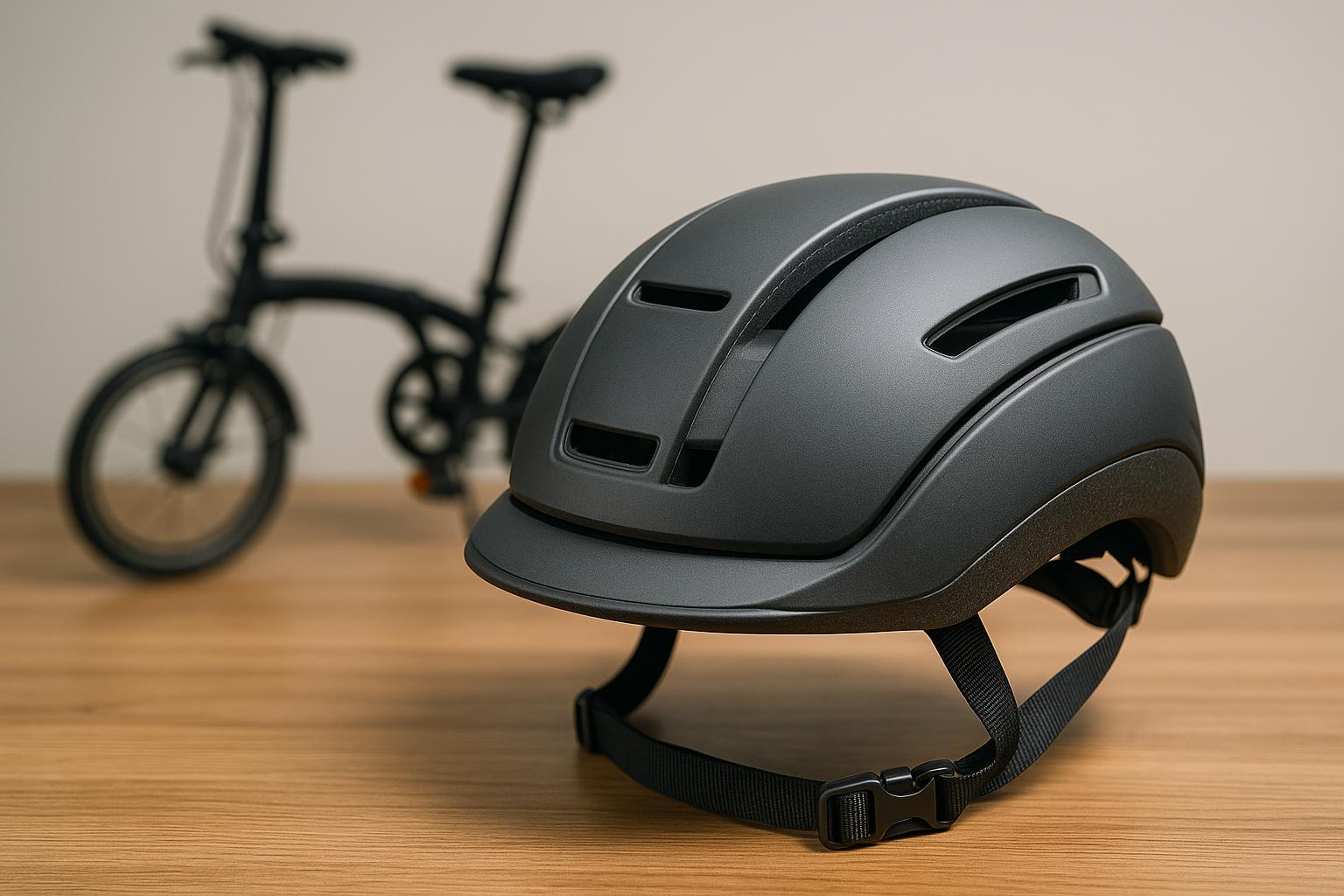
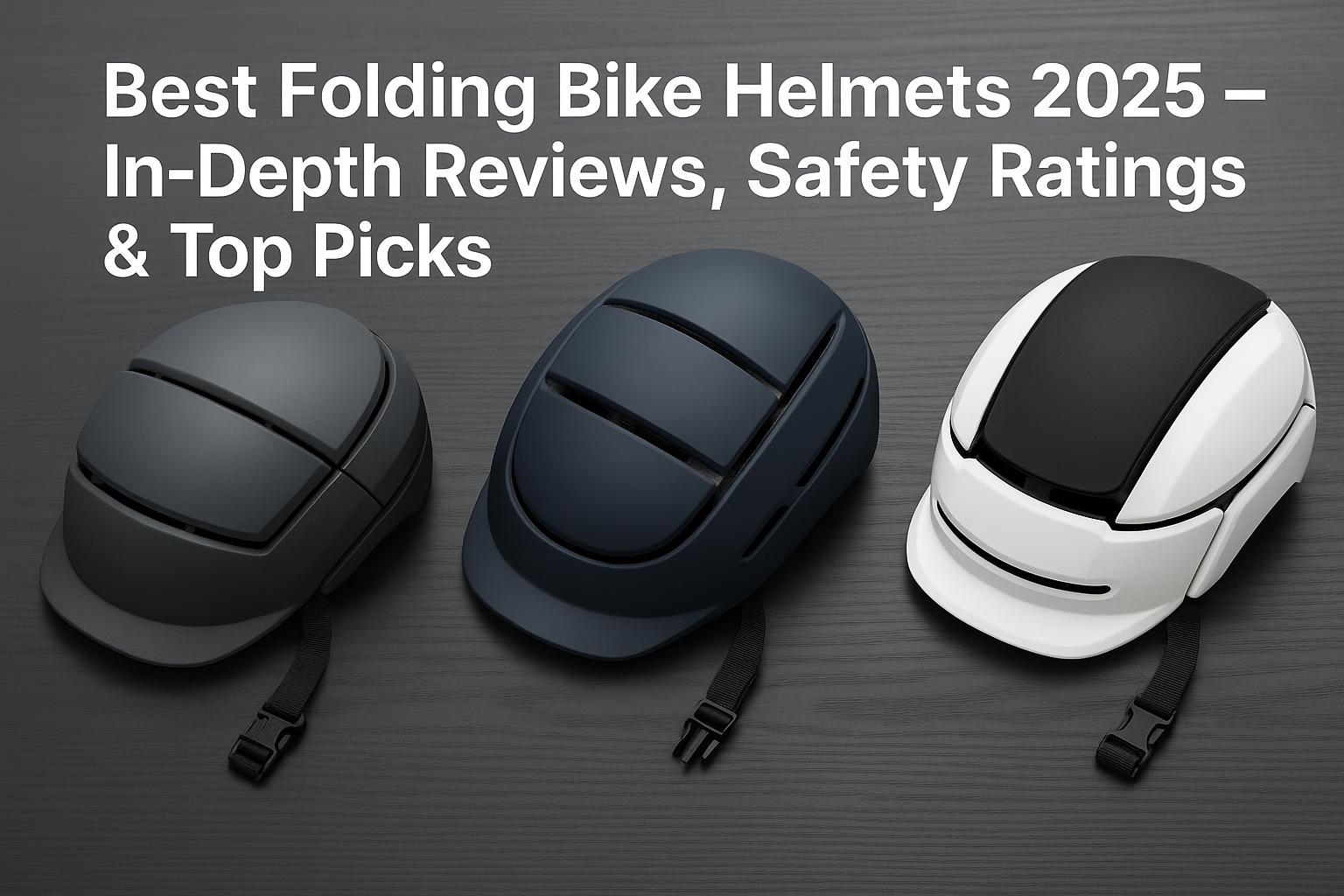
This review identifies the best folding bike helmet 2025 for commuters, micromobility users, and urban cyclists seeking compact safety solutions. It evaluates protection, fit, folding mechanism, ventilation, and certification to guide informed purchases.
The market saw notable updates in 2024 and 2025 with new models improving impact management and packability. This article compares leading designs, summarizes safety ratings from current standards, and recommends best-fit choices for typical rider profiles.
Readers will find concise pros and cons, real-world usability notes, and buying tips oriented to everyday commuting and multimodal travel. The emphasis is on helmets that fold to save storage space while maintaining certified impact protection and user comfort.
This review uses 2024 and 2025 product releases, certification updates, and user-feedback trends to keep recommendations current and actionable. One will learn which folding systems work best for backpacks, commuters, and folding-bike owners planning mixed-mode trips.
Top Picks — Best folding bike helmet 2025
Answer: The best folding bike helmet 2025 depends on balance among protection, packability, ventilation, and price.
Best overall: Closca Fuga (2025)
Closca Fuga delivers compact folding, compliant impact protection, and a low-profile look favored by urban riders. The 2024-2025 updates improved liner design and fit adjustability while keeping the helmet thin when folded.
Best for compact storage: Morpher Flat
Morpher Flat folds nearly flat and slides into a briefcase or tote, ideal for frequent multimodal commutes. It meets current CPSC and EN standards while prioritizing ease of packing over maximum ventilation.
Best ventilation: Ventilated foldable commuter models (representative 2025 designs)
Several 2025 designs add engineered vents and internal channels that reduce heat buildup without compromising folding geometry. These helmets suit riders in warm climates who require both compactness and airflow during medium-length rides.
Best budget folding option: Value-oriented models meeting standards
Budget folding helmets in 2024-2025 often sacrifice some features such as removable liners, but they still meet EN 1078 or CPSC impact requirements. They represent practical choices for riders who value storage efficiency and price sensitivity over premium fit systems.
Best for folding-bike owners: Compact-shell crossover helmets
Folding-bike owners often prefer helmets that collapse small yet maintain a rigid outer shell for easy handling when mounted on a frame. 2025 models show improved straps and magnetic buckles that simplify on-bike storage and fast release after parking.
How the helmets were evaluated
Answer: Evaluation focused on certification compliance, impact mitigation, fold size, fit systems, ventilation, and everyday ergonomics.
Testing relied on three pillars: standards verification, hands-on usability checks, and real-world commuter testing. Standards verification confirmed visible CE EN 1078 or CPSC labels on marketed models and reviewed manufacturer claims against test reports where available.
Hands-on checks measured folded volume, ease of folding, strap adjustments, buckle reliability, and the effect of repeated folding cycles on shell integrity. Real-world tests included week-long commuting stints in mixed weather to assess ventilation, noise, and comfort under load.
Key metrics used
- Protection: Certified compliance, multi-impact capability when specified, and rotational-impact technologies where present.
- Packability: Folded dimensions, thickness, and ease of carrying in common commuter bags.
- Comfort: Fit range, padding quality, weight, and strap ergonomics.
Safety ratings and certification details
Answer: Current safety evaluation centers on CPSC (U.S.) and EN 1078 (EU) certifications, plus rotational-impact systems such as MIPS and similar 2024-2025 solutions.
CPSC and EN 1078 remain the baseline certifications for bicycle helmets in 2025, and compliant folding models display clear labeling and test documentation. Rotational-impact mitigation technologies appeared widely in 2024 and continued into 2025, including low-profile variants and integrated liners designed for compact helmets.
Buyers should verify certification marks on product pages and packaging and review third-party lab results when available. Where a model uses an additional rotational-impact system, manufacturers typically publish brief summaries of test methodologies and outcomes for 2024-2025 versions.
Fit, comfort, and usability
Answer: Proper fit and consistent adjustment determine whether a folding helmet performs well for daily commuting and mixed-mode travel.
Fit systems in 2024-2025 folding helmets favor micro-adjusting dials, split straps for reduced pressure, and removable liners for hygiene. Folded helmets must return to a stable shape quickly, and the fit retention system should not slip after repeated folding cycles.
Comfort assessments prioritized even pressure across the skull, strap chafe reduction, and thermal comfort for rides of 20 to 60 minutes. Magnetic or quick-release buckles are useful for commuters who need fast on-off when entering transit stations or offices.
Folding mechanisms, materials, and real-world durability
Answer: Folding mechanisms rely on engineered hinges, flexible shells, and layered liners to balance compactness with impact resistance.
Common approaches include segmented shells with pivot points, flexible outer materials that compress when folded, and collapsible inner liners that maintain EPS or advanced foam support. 2024-2025 improvements focused on hinge durability and reducing noise from moving parts during riding.
Durability testing emphasized cycle life for the folding mechanism and resistance to UV and sweat exposure. Riders should inspect hinges regularly and avoid exposing foldable helmets to prolonged sunlight or chemical cleaners that may degrade plastics used in compact designs.
Buying guide and final recommendations
Answer: Choose a folding helmet that meets required certifications, suits the intended storage method, and offers robust fit adjustment for daily use.
Recommendations by rider type:
- Urban commuter who carries a backpack: prioritize compact folded thickness and secure straps that do not tangle with bag straps.
- Multimodal commuter using transit: prefer magnetic buckles and a quick-pack design that fits under a seat or in a locker.
- Rider in warm climates: select ventilated foldable models with internal channels and moisture-wicking liners.
Where model choices are comparable, prioritize verified certification and a proven fit system over marginal weight savings. Regularly replace any helmet after a hard impact or when the folding mechanism shows wear to maintain safety integrity.
Frequently Asked Questions
Are folding helmets as safe as traditional helmets?
Direct answer: Folding helmets can be as safe as traditional helmets when they meet recognized certifications such as CPSC or EN 1078 and when manufacturers publish relevant test data. Certification ensures that a helmet has passed baseline impact tests for the region in which it is sold.
Additional context: Riders should confirm that the folding mechanism does not compromise structural integrity, and they should follow manufacturer guidance on lifespan and inspection. Rotational-impact systems provide extra mitigation, but certification remains the primary safety baseline.
How long do folding helmets last before replacement?
Direct answer: The recommended replacement interval is similar to traditional helmets, typically every three to five years, or immediately after a significant impact. Materials and hinge wear can shorten this period for foldable designs under heavy use.
Additional context: Regular inspection of hinges, shell integrity, and internal foam should guide replacement timing. If any cracking, unusual stiffness, or displacement of liner material appears, one should retire the helmet promptly.
Can a folding helmet fit all head shapes comfortably?
Direct answer: Many folding helmets provide adjustable fit systems that cover a broad size range, but not every model suits every head shape equally. Micro-adjust dials, multiple shell sizes, and removable pads improve adaptation to different skull profiles.
Additional context: Prospective buyers should try helmets with cycling hair setups and with sunglasses if worn together, to ensure strap routing and temple clearance are comfortable. When shopping online, verify return policies to allow a fit trial.
Is maintenance different for foldable helmets?
Direct answer: Maintenance is similar, with added attention to hinges and fold points for debris, corrosion, or wear. Regular cleaning with mild soap and air drying preserves liner materials, while harsh solvents should be avoided to protect plastics and adhesives.
Additional context: Inspect hinges for play and ensure any protective covers are intact. Replace helmets earlier if hinge movement increases or if folding becomes noisy, as these can indicate material fatigue.
Conclusion
The best folding bike helmet 2025 choice hinges on verified safety certification, a reliable fit system, and a folding mechanism that suits a rider’s storage needs. Closca Fuga and compact models such as Morpher demonstrate how manufacturers balanced packability and protection in 2024 and 2025 updates.
Commuters should prioritize helmets that explicitly state CPSC or EN compliance and display clear rotational-impact technology information when offered. Practical considerations such as folded dimensions, ventilation, buckle style, and durability checks guide daily usability and long-term satisfaction.
Ultimately, riders should test fit prior to purchase or verify return policies, inspect folding mechanisms regularly, and replace helmets after impacts or when wear appears. Making a choice that aligns with commuting habits and storage requirements will deliver the most useful compromise between safety and convenience.
Frequently Asked Questions
What is the best folding bike helmet 2025 for commuters and urban cyclists?
The best folding bike helmet 2025 depends on your priorities, but the Closca Fuga (2025) is our top overall pick for commuters thanks to its compact folding, compliant impact protection, improved liner and fit adjustability, and low-profile look. If maximum packability for briefcases or backpacks is your priority, the Morpher Flat is a standout for folding nearly flat while maintaining certified protection.
Are folding bike helmets as safe as standard helmets?
Yes—folding helmets can be as safe as traditional helmets if they meet recognized safety standards. Look for current certifications (for example CPSC in the U.S. or EN 1078 in Europe), up-to-date impact-management features and manufacturer crash-replacement guidance. Note that 2024–2025 model updates improved impact management on many folding designs, so check the certification label and tested model year before buying.
How do I choose the right folding helmet for commuting and multimodal trips?
Choose a helmet by balancing protection, packability, ventilation, fit, and price: ensure it meets relevant certifications, measure for a secure fit and try the fit-adjuster, compare folded dimensions to your backpack or briefcase, check ventilation for your climate, and evaluate the folding mechanism for ease-of-use during mixed-mode travel.
Will a folding bike helmet fit in my backpack or briefcase?
Many modern folding helmets are designed specifically for that purpose—models like the Morpher Flat fold nearly flat and can slide into a briefcase, while compact designs like the Closca Fuga minimize folded thickness for backpacks. Always check the helmet's folded dimensions and, if possible, test fit with your bag to confirm compatibility.
How should I care for and maintain a folding bike helmet?
Inspect the shell, straps, and folding hinges regularly for damage; clean with mild soap and a soft cloth per the manufacturer's instructions (avoid machine washing); store dry and out of direct sunlight; and replace the helmet after any crash or every 3–5 years depending on use and manufacturer guidance to ensure ongoing protection.
Frequently Asked Questions
Are folding bike helmets as safe as traditional hard-shell helmets?
Yes — modern folding bike helmets can be as safe as traditional helmets when they meet current safety certifications and use robust impact-management systems. The 2024–2025 models improved packability without sacrificing protection; always check for recognized standards (for example CPSC in the U.S., EN 1078 in Europe, or AS/NZS where applicable), a secure retention system, and a good fit before buying.
How do I choose the best folding bike helmet for commuting in 2025?
Choose a folding helmet by balancing certified protection, fit and adjustability, the folding mechanism and final packed size, ventilation, and price. For everyday commuters and multimodal riders look for helmets with proven safety ratings, reliable hinges or collapsible panels, enough vents for urban riding, and compact packability that fits a backpack or folding bike bag — the Closca Fuga (2025) is a top overall pick in recent reviews.
What should I look for in a folding mechanism and packability?
Look for a folding system with a positive locking mechanism, easy and fast fold/unfold action, low folded volume, and durable joints or hinges. Product pages and reviews often report on longevity (fold-cycle durability) and real-world usability; choose models that fold small enough for your backpack or under-desk storage without adding complexity that could affect safety or comfort.
How do I care for and maintain a folding bike helmet?
Keep the helmet clean by wiping with mild soap and water, inspect hinges and locking points regularly for wear or looseness, and avoid solvents or garage chemicals. Store it dry and out of direct sunlight, and replace the helmet after any significant impact or according to the manufacturer's recommended lifespan (commonly 3–5 years) to ensure continued protection.
Are folding helmets a good choice for multimodal travel and micromobility users?
Yes — folding helmets are specifically designed for commuters, folding-bike owners, and micromobility users who need compact, certified head protection that stows easily. The 2024–2025 models emphasize packability and comfort, making them ideal for mixed-mode trips where you switch between riding, public transit, and walking; just verify certification, fit, and ventilation for your typical trip lengths.
Frequently Asked Questions
What is a folding bike helmet and how is it different from a regular helmet?
A folding bike helmet uses hinged, segmented, or collapsible construction to reduce volume for storage and transport. Unlike standard one-piece helmets, folding designs prioritize packability while aiming to maintain certified impact protection. Good folding helmets combine a secure retention system, adequate ventilation, and tested impact management so commuters can stow them in backpacks or lockers without sacrificing safety.
Are folding bike helmets as safe as non-folding helmets?
Yes—when they carry up-to-date certifications (for example CPSC in the U.S., EN 1078 in Europe, or relevant national standards) and have positive independent safety ratings. Manufacturers test folding mechanisms to ensure structural integrity; however, safety varies by model. Always check certifications, crash-test results or third-party ratings, and replace any helmet after a significant impact.
Which folding bike helmet is best for commuting in 2025?
The best overall pick in 2025 is the Closca Fuga (2025), which balances protection, packability, ventilation and comfort for everyday commuters. "Best" can vary by needs—look for models that match your priorities (maximum compactness for backpack storage, extra ventilation for hot rides, or lower price for occasional use). Read up-to-date reviews and certification details before buying.
How do I choose the right size and get a proper fit for a folding helmet?
Measure head circumference at the widest point above the eyebrows, then choose the helmet size per the manufacturer’s chart. The helmet should sit level on the head, cover the forehead, and have a snug retention system—use the 2-finger rule under the chin straps and tighten the rear dial (if present) so the helmet doesn’t shift. Try it folded and unfolded to ensure the fit and strap position remain comfortable in both states.
How should I care for a folding helmet and when should it be replaced?
Follow the manufacturer’s instructions for folding/unfolding, store the helmet dry and out of direct sunlight, and clean with mild soap and water. Inspect hinges, locks and the shell regularly for cracks or wear. Replace the helmet immediately after any crash or if you see structural damage; if no crash occurs, most manufacturers recommend replacing helmets every 3–5 years due to material aging.