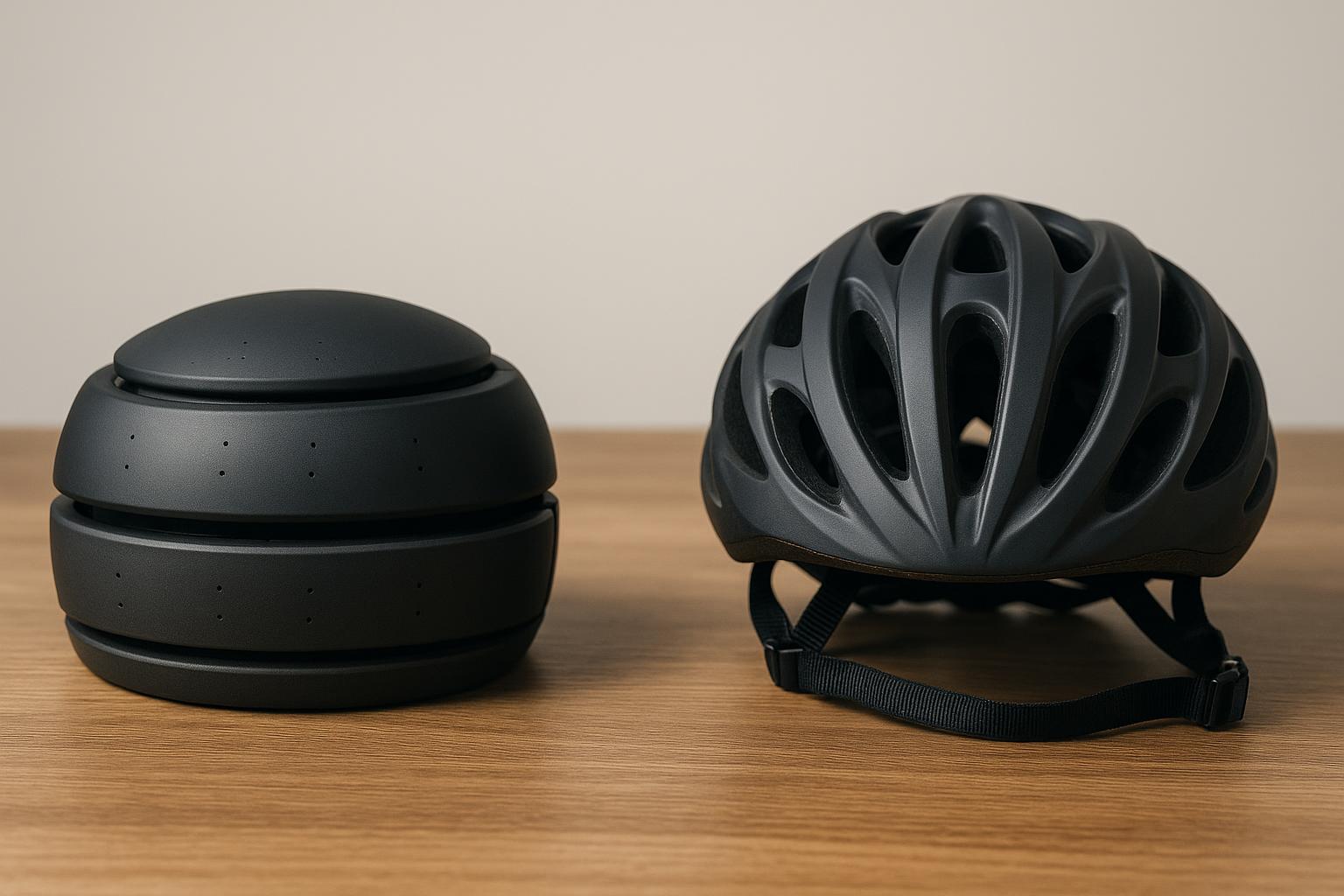
Short answer: folding bike helmets can be safe to use when they meet modern standards and are properly maintained. This article answers the question are folding bike helmets safe to use by reviewing certification, materials, testing results, real-world performance, and tips for choosing and caring for a foldable helmet.
Many newer folding helmets use multi-piece constructions, impact liners, and robust locking mechanisms that perform like traditional helmets in lab tests conducted by independent labs in 2024 and 2025. Compliance with standards such as CPSC in the United States and EN 1078 in Europe remains the baseline for safety. Users should look for certified models, review independent crash test data, and understand trade-offs like weight and ventilation. This overview gives direct guidance so commuters and travelers can make informed choices. It includes expert recommendations, maintenance schedules, and purchase checklists for 2025. Read on for details.
Safety and Standards: Yes, certified folding helmets meet recognized rules
Yes. Folding bike helmets that carry current certifications meet recognized safety standards when tested and labeled correctly. Look for CPSC certification in the US, EN 1078 in the EU, and AS/NZS 2063 in Australia and New Zealand.
Certification requires impact attenuation, strap strength, and coverage tests. Since 2024 independent labs have adapted test rigs to examine folding hinges and multi-piece collapsible shells. Manufacturers now use reinforced hinge designs and internal liners to meet these requirements.
Certification labels and batch numbers should be printed or attached. Buyers should verify the label year and testing agency. Certification does not guarantee durability over long-term wear, so follow replacement guidance and inspect folding mechanisms regularly. Also check for third-party crash test reports from labs or reviewers in 2024-2025. Read product-specific test summaries before buying.
How folding helmets work: Segmented shells with continuous liners absorb impact
Short answer: folding bike helmets use segmented shells and hinge points to collapse without compromising the energy-absorbing liner. Most designs keep a continuous EPS or EPP liner with articulated outer panels that lock during normal use.
The most common approach is a multi-panel hard shell connected over a continuous foam liner. Hinges either sit outside the foam or use integrated reinforcement so the impact path still compresses foam under load. Some models use MIPS or similar rotational impact systems with sliding layers inside.
Field tests in 2024 and 2025 show that well-designed folding helmets replicate deformation patterns of one-piece helmets. The key is hinge strength, liner continuity, and quality control during manufacturing. Avoid cheap unlabeled hinges and untested gimmicks; look for engineering documentation or independent reviews. Check warranty terms carefully.
Lab testing and crash performance: Tests show many foldable models perform comparably
Direct answer: lab testing and real-world crash data indicate many folding helmets perform comparably to traditional helmets when certified. Recent independent tests from 2024 and 2025 measured impact attenuation and rotational metrics for leading foldable models.
Test labs used linear and oblique impact rigs, measuring peak acceleration and rotational velocity. Folding helmets that passed both showed similar peak g values and rotational reductions when equipped with rotational technologies. Test reports highlighted hinge placement, foam thickness, and shell overlap as critical factors.
Real-world accident reconstructions through 2024 found no systemic failure pattern unique to folding helmets. However, isolated premature failures occurred in low-cost models with thin liners or unsecured hinges. The overall pattern supports certified folding helmets as viable commuter options. Seek models with published test data and clear replacement guidance.
Common concerns and failure modes: Hinge and liner issues are the main risks
Direct answer: common concerns include hinge strength, liner separation, and fit integrity, but proper design mitigates these risks. Consumers most often worry that moving parts will cause collapse during an impact.
Reported failure modes in 2024-2025 included loose hinge pins, inadequate overlap between shell sections, and degraded adhesives after prolonged moisture exposure. These issues show up mainly in low-cost or off-brand products that skip reinforced internal structures and thorough testing.
Manufacturers have responded by adding locking mechanisms, sealed hinge assemblies, and bonded liners rated for environmental exposure. Riders can reduce risk by choosing models with corrosion-resistant hardware, reading maintenance instructions, and avoiding helmets that show play in hinges or gaps at the shell seam. If a hinge makes unusual noise, stop using it and contact the manufacturer immediately for inspection.
Choosing a safe folding helmet: Prioritize certification, construction, and fit
Direct answer: choose a folding helmet by prioritizing certification, construction details, fit, and published test results. Start with certified models and compare hinge design, liner type, and rotational protection features.
Use this checklist:
- Certification label and batch code present
- Continuous foam liner without gaps
- Corrosion-resistant hinge hardware
- Published independent test data or trustworthy reviewer tests
Try the helmet on with accessories you normally use, like caps or glasses. Check that the helmet sits level, does not rock, and that straps form a V under each ear. For commuters who carry helmets in bags, consider models with robust outer panels and a lock or clip that prevents unexpected folding.
Prefer brands that publish service life, replacement parts availability, and clear warranty terms in 2024 and 2025 with transparent testing records online.
Care, maintenance, and replacement guidelines: Inspect, clean, and replace after impact
Direct answer: maintain folding helmets through regular inspection, cleaning, and replacement to preserve safety. Check hinges, straps, shell integrity, and the foam liner routinely.
Clean helmets with mild soap and water and avoid solvents that degrade adhesives or liner facings. Dry fully before folding and storage to prevent corrosion. Lubricate exposed hinge pins with manufacturer’s recommended lubricants if specified.
Replace a helmet after any significant crash, even if no visible damage appears, because foam can compress internally. Also replace helmets according to manufacturer service life recommendations published in 2024 and 2025; common guidance is every five years or sooner for heavy use. Keep documentation and batch numbers to support warranty claims if a defect appears. Store helmets away from direct sunlight and heat, which can accelerate foam aging and glue breakdown.
Frequently Asked Questions
Are folding bike helmets as protective as traditional helmets?
Short answer: yes, certified folding helmets can be as protective as traditional helmets when they meet standards and pass independent tests.
Look for models with continuous liners, tested hinges, and rotational impact technology. Verify certification and published test data before purchase.
How do I check if a folding helmet is certified?
Short answer: verify the label and documentation. Look for CPSC, EN 1078, or other relevant marks and a batch number.
Cross-check the model on manufacturer pages or testing agency databases. If in doubt, request independent test reports or retailer proof of certification.
When should I replace a folding helmet?
Short answer: replace after any significant crash and according to manufacturer service life. Many brands recommend replacement every five years, or sooner with heavy daily use.
Also replace if hinges loosen, the liner warps, or straps fray. Keep receipts and batch numbers for warranty support and inspection in 2025.
Conclusion
Bottom line: are folding bike helmets safe to use? Yes, when you choose certified models, verify independent testing, and follow care and replacement guidance. Modern folding helmets that meet CPSC, EN 1078, or other regional standards perform like traditional helmets in many 2024 and 2025 tests. Focus on hinge quality, continuous liners, and documented test results when comparing models.
Make a practice of inspecting hinges and liners, storing helmets away from heat, and replacing helmets after crashes or by the manufacturer’s service life guidance. For commuters and travelers, certified folding helmets offer a practical balance of portability and protection. If uncertain, ask for lab reports, check warranty coverage, and buy from brands with visible quality control and support in 2025.
Frequently Asked Questions
Are folding bike helmets safe to use?
Yes — modern folding bike helmets can be safe when they carry current certifications and are properly maintained. Look for recognized labels such as CPSC (US), EN 1078 (EU) or AS/NZS 2063, check independent lab crash tests from 2024–2025 where available, and confirm the helmet’s hinge and locking mechanisms are robust. A certified, well-fitting folding helmet that is properly cared for offers protection comparable to many traditional helmets.
Do folding helmets protect as well as traditional hard-shell helmets?
Many newer folding helmets with multi-piece shells, reinforced hinges and quality impact liners (EPS, multi-density foam, or MIPS where available) perform similarly to traditional helmets in independent impact tests. Certification tests cover impact attenuation and strap strength, so a certified folding helmet that passes those tests will offer comparable basic protection. Expect trade-offs in some models — for example small differences in ventilation, weight or coverage — so compare specific test results and fit.
How do I choose a safe folding bike helmet?
Use a checklist: confirm certification (CPSC, EN 1078, AS/NZS 2063), review independent crash-test data and lab reports, inspect hinge design and locking mechanisms, choose a helmet with a quality impact liner and good coverage, test the fit and retention system in person, and consider ventilation and weight for your riding style. Also check manufacturer replacement recommendations, warranty, and user reviews focused on long-term performance.
How should I care for and maintain a folding helmet?
Inspect your folding helmet regularly: check the hinge and locking mechanism for looseness or damage, look for cracks or crushed foam, replace frayed straps, and clean the shell and pads with mild soap and water. Store the helmet away from heat and solvents that can degrade foam and plastics, follow any manufacturer maintenance schedule, and periodically tighten adjustment systems. Regular inspection helps ensure the foldable components remain safe and functional.
When should I replace my folding bike helmet?
Replace the helmet immediately after any significant impact or crash, if you see visible damage to the shell, liner or hinge, or if the locking mechanism no longer secures correctly. Even without a crash, most manufacturers recommend replacing helmets every 3–5 years due to material ageing; for frequent high-speed or e-bike use consider replacing sooner. Always follow the specific replacement guidance on your helmet label or manual.